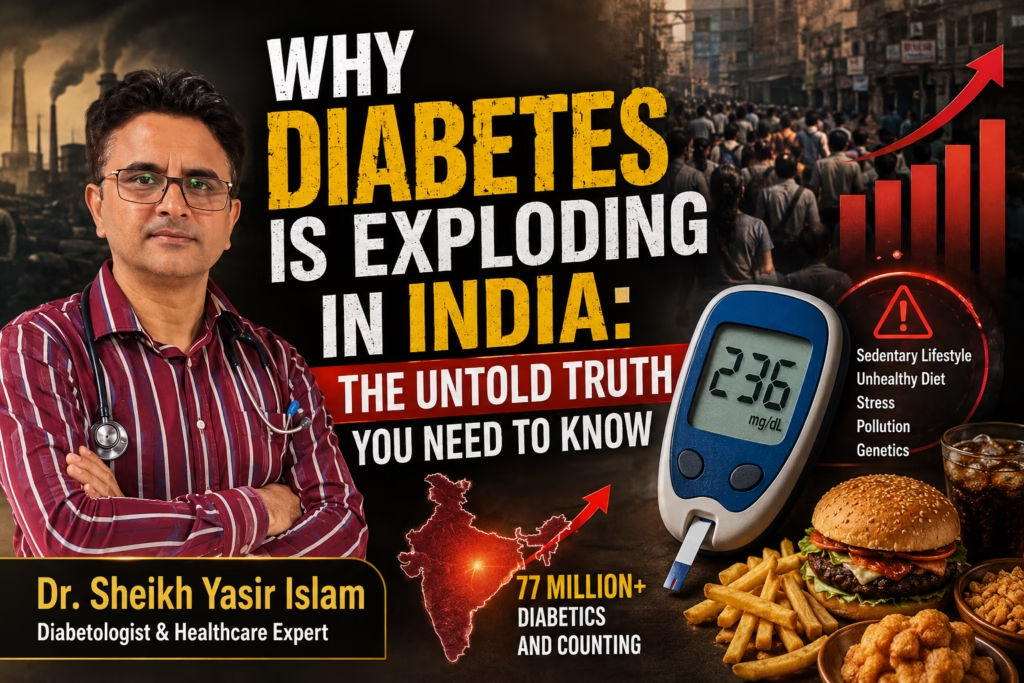

India is facing a silent epidemic. Once considered a rare condition, diabetes has now become one of the most common chronic diseases in the country — affecting millions who don’t even know they have it. In a revealing conversation on The Untold Truth Podcast, Dr. Sheikh Yasir Islam, Consultant Physician and Professor of Medicine at Lady Hardinge Medical College, New Delhi, breaks down the real reasons behind India’s diabetes explosion, who is most at risk, and what can actually be done about it.
If you’re Indian — or if you love someone who is — this is one health conversation you cannot afford to ignore.
What Is Diabetes, Really? A Simple Explanation
Before diving into why diabetes is skyrocketing across India, it’s important to understand what the condition actually is.
The Medical Definition
According to WHO diagnostic criteria, a person is considered diabetic when:
- Fasting blood sugar is ≥ 126 mg/dL
- Random or post-meal blood sugar is ≥ 200 mg/dL
- HbA1c is greater than 6.5%
But as Dr. Islam emphasizes, the story doesn’t start when these numbers show up on a lab report. The biological changes that lead to diabetes can begin one to two decades before a formal diagnosis. This is precisely why diabetes is called a silent killer — by the time you know you have it, the damage has often already begun.
Type 1 vs. Type 2 Diabetes
There are primarily two types of diabetes:
- Type 1 Diabetes — Typically seen in children and young adults. In this form, the pancreas fails to produce insulin, usually due to an autoimmune response.
- Type 2 Diabetes — The far more common form, strongly linked to lifestyle factors like diet, physical inactivity, and obesity. This is the type that is exploding across India.
Why Diabetes Has No Obvious Symptoms — And Why That Makes It Deadly
One of the most dangerous aspects of Type 2 diabetes is that most people feel completely fine — until they don’t.
Dr. Islam points out a stark reality from his daily clinical practice at Lady Hardinge Medical College: out of approximately 150 patients he sees in his OPD every single day, nearly 100 are diabetic. That means every second or third patient has diabetes.
Yet a significant percentage of these patients had no idea they were diabetic before arriving.
Why People Ignore It
Unlike a toothache or ear pain — which demand immediate attention — diabetes causes no acute pain in its early stages. There’s no urgency. No alarm. Patients don’t rush to a doctor because nothing hurts.
Diabetes is only discovered when:
- A routine health checkup is done
- A patient comes in for an unrelated complaint and blood tests are ordered
- Complications already appear — by which point significant damage has occurred
The Real Reasons Diabetes Is Exploding in India
India’s diabetes crisis isn’t happening by accident. Dr. Islam identifies several interconnected reasons why the country has become a global hotspot for this disease.
1. The Dramatic Shift in Lifestyle
Previous generations of Indians walked everywhere, ate whole foods, and performed significant physical labour. Today, that has changed almost entirely.
- Motorized transport has replaced walking and cycling
- Desk jobs and sedentary routines have replaced physical work
- Fast food, processed meals, and sugar-laden snacks have replaced traditional home cooking
These lifestyle shifts have directly contributed to rising obesity rates — and obesity is one of the strongest risk factors for Type 2 diabetes.
2. India’s Deep Regional Food Dependencies
One of the most nuanced points Dr. Islam raises is how Indian regional diets make standard diabetes advice nearly impossible to follow.
- In Bihar, rice is a dietary staple. Telling someone there to avoid rice is not a realistic option.
- In Gujarat, sweets are embedded in nearly every dish and social occasion.
This creates a unique challenge: generic dietary advice doesn’t work across such a diverse country. A one-size-fits-all approach to diabetes management in India is fundamentally flawed.
3. Obesity — Now Classified as a Disease in Its Own Right
The World Health Organization (WHO) has officially classified obesity as a disease — not just a risk factor, but a standalone medical condition. Dr. Islam emphasizes this point strongly.
Obesity drives insulin resistance, which is the fundamental mechanism behind Type 2 diabetes. As India’s urban population grows more sedentary and its food environment becomes more calorie-dense, obesity rates — and by extension, diabetes rates — continue to climb.
4. The Rise of Childhood Obesity and Early-Onset Type 2 Diabetes
Perhaps the most alarming trend discussed in the podcast is that Type 2 diabetes — once considered an adult disease — is now being diagnosed in children.
The reasons are disturbingly familiar:
- Children spend far more time on screens — mobile phones, tablets, laptops, and television
- Physical play has dramatically declined — the neighbourhood cricket matches and outdoor games of past generations are rare today
- Parents, often overwhelmed themselves, hand children phones to keep them occupied — unaware of the long-term health consequences
This combination of zero physical activity and poor diet is creating a generation of obese, pre-diabetic children in India.
5. Mental Health, Depression, and Emotional Eating
Dr. Islam draws a direct line between mental health and metabolic disease — a connection many people don’t consider.
He points to numerous celebrities, including well-known artists and musicians, who fell into depression and responded by overeating. The result? Rapid weight gain, abdominal obesity, and ultimately, diabetes.
Depression and stress trigger hormonal changes that promote fat storage and insulin resistance. When emotional eating is layered on top, the risk escalates dramatically.
The Devastating Complications of Uncontrolled Diabetes
Why does it matter so much if someone doesn’t know they have diabetes? Because untreated or poorly managed diabetes silently destroys multiple organ systems over years.
Organs Affected by Diabetes
Dr. Islam outlines the serious complications that bring patients to hospitals — often at a critical, late stage:
- Kidneys — Diabetic nephropathy leading to kidney failure and dialysis. Dr. Islam states bluntly: “60% of patients on dialysis today were diabetic.”
- Heart — A massive proportion of heart attack (MI) patients are diabetic — Dr. Islam estimates 50–60% of cardiac patients have diabetes
- Brain — Stroke and brain damage are significantly more common in diabetics
- Eyes — Diabetic retinopathy can lead to blindness
- Nerves — Peripheral neuropathy causing numbness, pain, and loss of sensation in the limbs
The tragedy is that many of these complications are preventable with early diagnosis and proper management.
Food Adulteration: A Hidden Driver of India’s Diabetes Crisis
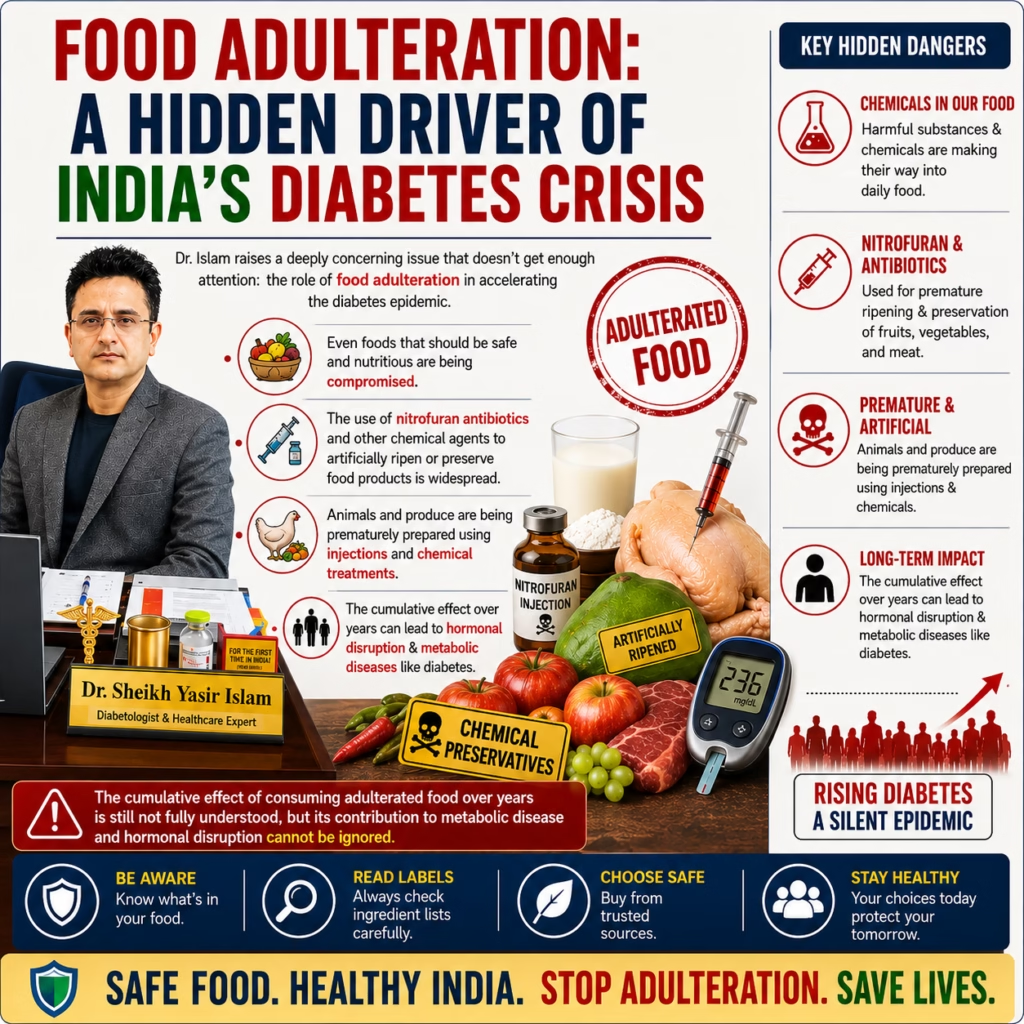
Dr. Islam raises a deeply concerning issue that doesn’t get enough attention: the role of food adulteration in accelerating the diabetes epidemic.
He highlights that even foods that should be safe and nutritious are being compromised. The use of nitrofuran antibiotics and other chemical agents to artificially ripen or preserve food products is widespread. Animals and produce are being prematurely prepared using injections and chemical treatments.
The cumulative effect of consuming adulterated food over years is still not fully understood, but its contribution to metabolic disease and hormonal disruption cannot be ignored.
New Treatments Making Waves: Ozempic, Mounjaro, and Beyond
The podcast also covers the pharmaceutical revolution in diabetes and obesity treatment — particularly the global buzz around Ozempic (semaglutide) and Mounjaro (tirzepatide).
From Diabetes Drug to Number One Heart Failure Treatment
Dr. Islam makes a remarkable statement: the drug he’s referring to — originally developed for blood sugar control in diabetics — has now become the number one medication for heart failure.
This reflects the growing understanding that diabetes, obesity, and cardiovascular disease are deeply interconnected, and that treating one often benefits the others.
Who Should Consider These Medications?
Dr. Islam is thoughtful here. He describes these injectable medications as “a blessing” for a specific group of people:
- Those who have made genuine, sustained lifestyle efforts — exercise, dietary changes, calorie management
- Those who still cannot lose weight despite consistent effort
- Those with medically significant obesity that is contributing to other diseases
He is not advocating for these drugs as a shortcut. Rather, as a tool for patients where lifestyle intervention alone has not been sufficient.
Emergency Preparedness: What to Do When Blood Sugar Spikes Unexpectedly
Dr. Islam addresses a question many diabetics and their families fear: what do you do if blood sugar spikes unexpectedly when you’re far from medical care?
Imagine you’re trekking in the mountains, on a pilgrimage to Vaishno Devi, or camping in a remote area — and suddenly:
- Blood sugar shoots up dangerously high
- You feel your breathing becoming uncontrollable or labored
- You’re heading toward a serious hyperglycemic episode
This is a medical emergency. Dr. Islam stresses the importance of:
- Always carrying your medications and glucose monitoring equipment
- Having an emergency contact plan before traveling to remote areas
- Knowing the warning signs of hyperglycemia and hypoglycemia
- Informing travel companions about your condition so they can assist
This advice applies equally to children with diabetes — parents need to be especially vigilant during travel, school activities, and outdoor events.
Dr. Sheikh Yasir Islam: From Jammu to Lady Hardinge Medical College
For those unfamiliar with his background, Dr. Sheikh Yasir Islam’s journey is itself an inspiring story.
He completed his MBBS and MD at Government Medical College (GMC), Jammu — driven from childhood by a desire to serve patients and make his family proud. He watched his parents struggle to navigate overcrowded government hospitals, and resolved to become the kind of doctor who could make a real difference.
After completing his senior residency at Lady Hardinge Medical College (LHMC), New Delhi, he cleared the UPSC examination — the gateway to government medical service — and was appointed as Assistant Professor of Medicine. He has since risen to the rank of Professor of Medicine at LHMC.
In a full-circle moment, he was invited back to GMC Jammu as an external examiner in 2024 — returning to the institution where his journey began, now as one of its distinguished alumni.
India’s Medical Education System: A Hidden Strength
During the conversation, Dr. Islam also praises India’s medical education infrastructure, pushing back against the narrative that Indian doctors trained abroad are automatically superior.
He points out:
- India offers world-class clinical exposure during MBBS and postgraduate training
- The sheer volume of patients seen by Indian medical students and residents is unmatched globally
- The infrastructure and faculty at top government medical colleges are genuinely excellent
The practical experience gained in Indian hospitals — dealing with enormous patient loads and vast disease diversity — produces highly competent, adaptable clinicians.
Key Takeaways: What You Can Do Right Now
The India diabetes epidemic is real, growing, and reaching into younger and younger populations. But it is not inevitable for you or your family. Here’s what Dr. Islam’s insights translate to in practical terms:
Immediate Actions
- Get a blood sugar test — fasting, post-meal, and HbA1c — even if you feel perfectly fine
- Know your numbers: Fasting <100 is normal; 100–125 is pre-diabetic; ≥126 is diabetic
- Don’t wait for symptoms — there may not be any until serious damage has occurred
Lifestyle Changes That Matter
- Increase daily physical activity — even brisk walking for 30–45 minutes makes a measurable difference
- Reduce processed and fast food consumption
- Be mindful of regional dietary habits that may be high in refined carbohydrates or sugar
- Limit screen time for children and encourage outdoor play from a young age
Mental Health Awareness
- Recognize the link between stress, depression, and weight gain
- Seek help for mental health challenges before they cascade into physical disease
Medical Consultations
- If you have a family history of diabetes, get tested regularly
- If you are obese and struggling to lose weight despite genuine effort, speak to a physician about newer treatment options
- If you are diabetic, monitor your kidneys, heart, and eyes regularly — don’t wait for problems to