
Introduction
What if the food you’ve been told to eat your entire life is actually making you sick? And what if the ancient grain your grandparents called “cattle feed” is actually the most powerful healing superfood on the planet?
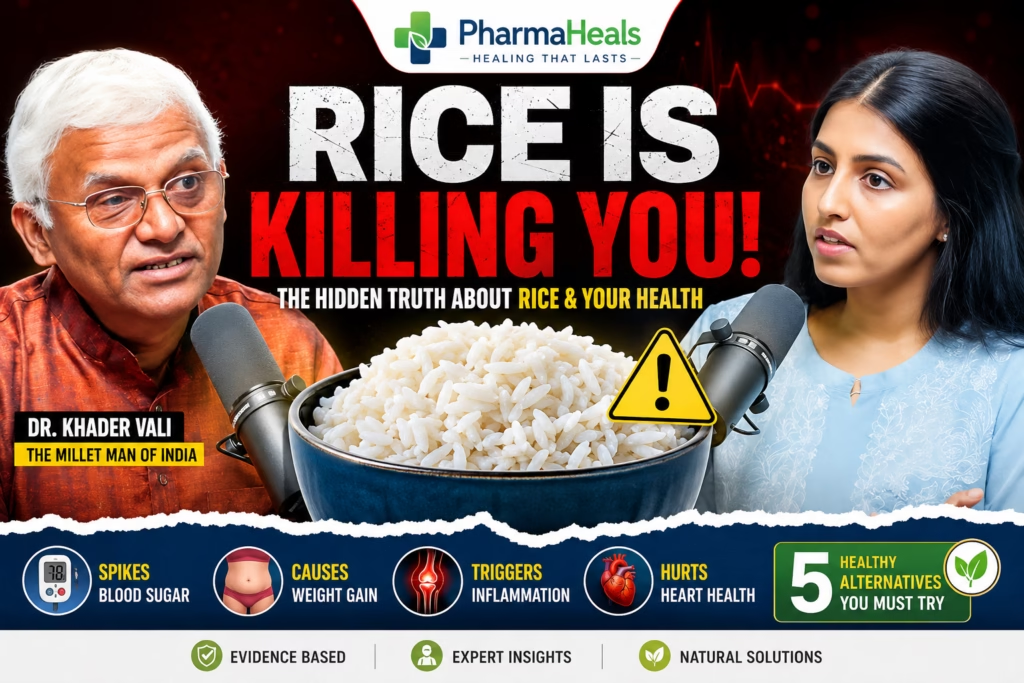
In a groundbreaking conversation on the Body to Being podcast with Shlloka, Padmashri Dr. Khader Vali — widely known as the Millet Man of India — dismantles decades of food myths with razor-sharp science and relentless conviction. A PhD in steroid biochemistry from the Indian Institute of Science, Bengaluru, and a postdoctoral fellow from Oregon Graduate Center in the United States, Dr. Khader Vali left a pioneering scientific career in America to return to India and dedicate 25 years of his life to one mission: bringing millets back to the human table.
This blog post summarizes the most critical insights from that conversation — insights that could fundamentally change the way you think about food, disease, and healing. Whether you are dealing with diabetes, blood pressure, PCOD, thyroid issues, or cancer, what Dr. Khader Vali has to say is nothing short of life-changing.
Why Rice and Wheat Are Making You Sick
The Science of Negative Grains
Dr. Khader Vali makes a bold, evidence-backed claim right at the outset: wheat and paddy rice are negative grains that human beings should not be eating.
This isn’t a dietary preference. It’s biochemistry.
When you eat just 50 grams of rice — even in the form of idli — your blood is flooded with glucose within 15 to 20 minutes. Your entire bloodstream contains approximately 5 grams of glucose at any given time to maintain homeostasis. When that threshold is crossed repeatedly, the blood thickens. And a thicker blood means the heart has to work harder to pump it to every cell in your body.
The cascade that follows is predictable and devastating:
- Blood pressure rises as the heart strains to pump thickened blood
- Scaling builds up on the walls of blood vessels, similar to how mineral deposits clog pipes
- Arterial blockages form, especially around the curved arteries near the heart
- Heart disease — the world’s number one cause of death — follows
“By eating rice and wheat over a period of time, you are generating blood pressure to start with.” — Dr. Khader Vali
And yet, the experts rarely talk about this. Billions of people continue eating rice three times a day, wondering why they are developing diabetes, hypertension, and heart disease.
Why Rice and Wheat Were Never Meant for Everyone
Rice and wheat are C3 plants — they require abundant water to grow. Paddy rice requires 8,000 to 9,000 litres of water per kilogram to irrigate. Wheat requires 10,000 litres. These crops were historically grown only in regions where water was naturally abundant.
The corporate food industry changed all of that. By building dams, mining water resources, developing chemical fertilizers and pesticides, and centralizing food production through patent systems, corporations stripped farmers of their seed sovereignty and flooded the global food system with two crops that the planet was never designed to grow everywhere.
The result? Deforestation. Loss of biodiversity. Farmer suicides. A healthcare crisis of historic proportions.
“We have been made to lose. It’s a very well-planned system.” — Dr. Khader Vali
What Are Millets and Why Are They Nature’s Superfood?
Millets Are C4 Grasses — The Plants That Sustain the Planet
Millets belong to a group of plants called C4 grasses, which photosynthesize differently from most other plants. C4 grasses cover the majority of the Earth’s landmass — deserts, plains, and dry regions — and they thrive without irrigation.
While paddy rice needs up to 9,000 litres of water per crop cycle, millets need only 200 litres. They can grow in temperatures ranging from 10°C to 45°C — conditions that would destroy rice and wheat crops entirely. They grow anywhere, anytime, in almost any soil condition.
Beyond being water-efficient, millets don’t just sustain the environment — they replenish it. As C4 plants, they absorb carbon dioxide and convert it into food without disturbing the surrounding ecosystem. They rebuild degraded soils and restore ecological balance.
The 200 Varieties the World Forgot
Dr. Khader Vali reminds us that there are approximately 200 varieties of millets on this planet — and we have lost most of them. What remains is a fraction:
- Foxtail Millet (Kangni)
- Barnyard Millet (Sanwa)
- Browntop Millet
- Little Millet (Kutki)
- Kodo Millet
- Finger Millet (Ragi)
- Sorghum (Jowar)
- Pearl Millet (Bajra)
- Proso Millet
These grains were the food of millions of generations of human beings — long before rice and wheat became commercial staples. In the last 100 years, they were systematically pushed out of the food system, labelled “primitive food” and “animal feed” by the very institutions that were supposed to protect public health.
The Healing Power of Millets: Disease Reversal in 3 Months
How Millets Regulate Blood Sugar
Unlike rice and wheat, which dump glucose into the bloodstream rapidly, millets — particularly the five minor millets Dr. Khader Vali has researched extensively — contain a high percentage of specialised fibre that holds carbohydrates back and releases glucose slowly and steadily into the bloodstream.
Here is the fibre content breakdown of the five key healing millets:
| Millet | Fibre Content |
|---|---|
| Kodo Millet | 9% |
| Browntop Millet | 12.5% |
| Barnyard Millet | 10% |
| Little Millet | 9.8% |
| Foxtail Millet | 8% |
This fibre acts as a natural glucose regulator, ensuring that blood glucose never crosses the critical 5-gram threshold. The result is 24/7 homeostasis — a stable blood environment that supports every organ in the body.
This is why Dr. Khader Vali groups grains scientifically:
- Negative grains: Rice and wheat (cause glucose spikes, generate disease)
- Neutral grains: Finger millet, sorghum, pearl millet (neither cause harm nor heal)
- Positive grains (Siri Dhanya): The five minor millets listed above — the true healers
Which Millet Heals Which Organ?
One of the most fascinating insights from Dr. Khader Vali is that different millets target different organs and conditions. This is why he strongly advises against mixing millets — each needs to be eaten individually in rotation to deliver its full therapeutic benefit.
Here is his organ-specific millet guide:
- Little Millet: Reverses PCOD, endometriosis, fibroids, and infertility — heals the reproductive system
- Foxtail Millet: Supports the lungs and nervous system
- Barnyard Millet: Heals the liver, heart, and kidneys
- Browntop Millet: Cleanses the entire digestive tract from mouth to anus
- Kodo Millet: Detoxifies bone marrow and blood circulation
“Next time when I have a sickness, instead of medicine, I should take a millet.” “Absolutely.” — Dr. Khader Vali
Can Millets Really Reverse Diabetes in 3 Months?
Yes — according to Dr. Khader Vali’s clinical experience and research, Type 1 and Type 2 diabetes can be reversed in approximately 3 months by strictly replacing rice and wheat with the five positive millets, eliminating dairy, dry fruits, and processed foods, and following the proper protocols.
Because blood cells regenerate in 3-month cycles, and the healing fibre of millets replenishes living cells while keeping blood glucose stable, the body has the raw materials it needs to rebuild itself. Even cancer patients have shown significant improvement within three cycles — approximately 9 months — on strict millet protocols.
Other conditions that millets can reverse include:
- Type 1 and Type 2 Diabetes
- Hypertension / Blood Pressure
- PCOD and Endometriosis
- Thyroid disorders
- Infertility
- Heart disease
- Lung and nervous system conditions
- Liver and kidney disease
- Cancer (prevention and reversal)
The Truth About Dairy: Why Milk Is Making You Sick
Milk Is Not a Complete Food
Despite decades of marketing that declared milk to be the perfect food, Dr. Khader Vali is unequivocal: no milk, not even A2 cow milk.
His reasoning is deeply scientific. Cow’s milk supports the growth of a calf — an animal that grows at a dramatically different rate than a human baby. Researchers calibrate the steroid balance in cow’s milk for calf development, not human development. When human infants and children consume cow’s milk, they are exposed to a steroid profile their bodies were never designed to process.
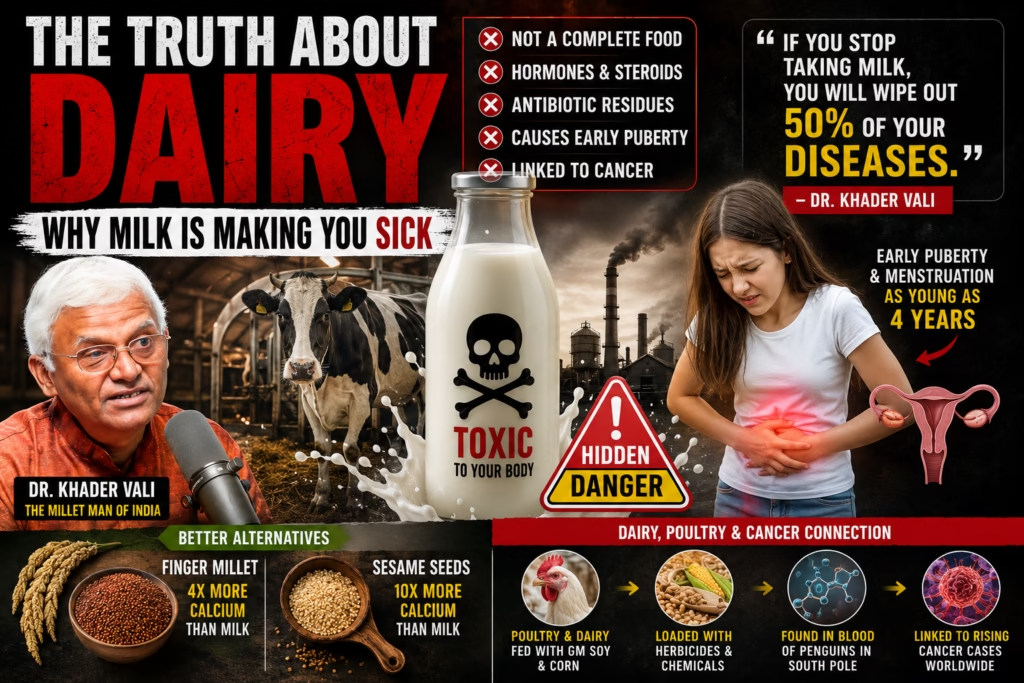
The consequences are staggering. The average age of menstrual onset in girls has dropped from 15 years to 8-9 years, driven almost entirely by steroid exposure from dairy consumption. Dr. Khader Vali reports seeing girls as young as 4 years old beginning menstruation at his clinic.
“If you stop taking milk, you will wipe out 50% of your diseases.” — Dr. Khader Vali
Modern Dairy Is an Industrial Product
The dairy industry, worth trillions of dollars, has transformed cows into industrial machines. Using in-vitro fertilisation, steroids, and antibiotics, each cow is made to produce 25 to 30 litres of milk per day — far beyond what nature intended. The steroid and antibiotic residues in this milk pass directly to consumers.
Concentrated dairy products like paneer, cheese, and butter are even more harmful — 10 grams of paneer is equivalent in its impact to drinking one full litre of milk.
The calcium argument for milk is also a myth. Cow’s milk contains approximately 900 mg of calcium per litre, but much of it is poorly absorbed by the human body. Finger millet contains four times more bioavailable calcium, and sesame seeds contain ten times more.
Dairy, Poultry, and Cancer
Dr. Khader Vali directly links two dietary habits to the rising global cancer crisis:
- Excessive dairy consumption
- Excessive poultry consumption
Both modern dairy cows and poultry are fed the same diet: genetically modified soy and corn. These feed crops are produced with massive quantities of herbicides — chemicals so pervasive that they have been found in the bloodstreams of penguins in the South Pole.
This means soy milk, widely promoted as a vegan alternative, is equally dangerous. Anything derived from soy, Dr. Khader Vali warns, should be treated as a health risk.
The Problem With Refined and Processed Foods
White Rice, White Sugar, and Refined Oils
Refinement is a corporate process, not a nutritional one. By removing the outer layers of grains, seeds, and plant materials, the industry strips away fibre, minerals, and phytonutrients while extending shelf life and creating addictive flavours.
- White rice: The husk and bran layers are removed, destroying whatever minimal fibre paddy rice contains
- White sugar: Floods the bloodstream with glucose faster than even rice — absorption begins in the mouth itself
- Jaggery: Despite its traditional reputation, jaggery still releases glucose within 4-5 minutes — only marginally better than refined sugar
- Refined oils: Chemically processed, stripped of nutrients, stored in plastic sachets that leach nanoplastics — the “healthy” olive oil being promoted is often imported from trees that don’t grow locally
The Natural Alternative: What Should We Actually Eat?
Dr. Khader Vali’s prescription is remarkably simple — and it aligns with how human beings ate for thousands of years before industrial food systems took over.
For oils: Use cold-pressed, traditionally extracted oils from locally grown seeds. Sesame oil, groundnut oil, and coconut oil (if you live in coastal regions) are the right choices — but only if they are extracted without heat or chemicals. The moment an oil is refined, it loses its healing properties entirely.
For sweeteners: Avoid all concentrated sweeteners as much as possible. If sweetness is necessary, use small quantities of unrefined palm sugar or coconut sugar — but understand that even these should be minimal.
For salt: Use rock salt or sea salt — never iodized industrial salt, which is a chemical product bearing little resemblance to natural mineral salts.
For protein: Contrary to what the fitness and nutrition industry promotes, Dr. Khader Vali argues that the human body does not need large amounts of concentrated animal or plant protein. The five positive millets, combined with locally grown vegetables, legumes, and greens, provide all the amino acids the human body requires — in the right proportions and at the right pace of absorption.
How to Begin Eating Millets: The Practical Guide
The Transition: How to Get Started
Dr. Khader Vali acknowledges that switching from rice and wheat to millets requires a period of adjustment — both physically and psychologically. The palate has been conditioned by decades of eating refined, processed foods engineered to be addictive. Millets taste different, feel different, and behave differently in the body.
Here is the practical protocol he recommends:
Step 1: Remove rice and wheat completely
This is non-negotiable. As long as rice and wheat remain in the diet, the healing grains cannot do their work. The glucose spikes from a single meal of rice will undo days of millet-based healing.
Step 2: Rotate the five positive millets
Do not mix millets together. Eat each millet for at least two to three days consecutively, then rotate to the next. This ensures each grain can deliver its specific therapeutic benefits to the target organs.
A simple rotation might look like this:
| Day | Millet |
|---|---|
| Day 1–3 | Foxtail Millet |
| Day 4–6 | Barnyard Millet |
| Day 7–9 | Kodo Millet |
| Day 10–12 | Little Millet |
| Day 13–15 | Browntop Millet |
Then repeat the cycle continuously.
Step 3: Prepare millets correctly
Millets must be soaked for a minimum of 8 hours before cooking — ideally overnight. Soaking activates enzymes, neutralises naturally occurring anti-nutrients, and improves bioavailability of minerals and fibre. Unsoaked millets will not deliver the same therapeutic benefit and may even cause digestive discomfort in some people.
After soaking, rinse thoroughly and cook simply — as you would cook rice or a grain porridge. No need for complicated recipes or preparations.
Step 4: Eat two meals a day — not three
Dr. Khader Vali strongly recommends eating only twice a day, with a gap of at least six to eight hours between meals. The digestive system requires time to process food completely. Constant snacking and three-meal-a-day patterns keep the digestive system perpetually active, never allowing it to rest and repair.
Step 5: Eat locally and seasonally
Whatever vegetables, greens, and legumes are grown in your region and are in season — those are your ideal accompaniments to millet meals. The concept of “superfoods” imported from across the world — quinoa from South America, chia seeds from Mexico, avocado from California — is a marketing construct. Your local ecosystem produces exactly what your body needs.
What to Eat With Millets
Dr. Khader Vali recommends pairing millets with:
- Locally grown vegetables — particularly leafy greens, root vegetables, and gourds
- Legumes and pulses — in moderate quantities, preferably sprouted or soaked
- Cold-pressed oils — in small quantities for cooking
- Rock salt or sea salt — for seasoning
- Fresh herbs and spices — turmeric, cumin, coriander, and other traditional spices that have been used in Indian cooking for thousands of years for very good biochemical reasons
What to avoid entirely:
- Rice, wheat, and all products made from them (bread, pasta, noodles, roti, idli, dosa, etc.)
- All dairy products — milk, curd, paneer, cheese, butter, ghee
- All forms of refined sugar
- Packaged, processed, and preserved foods
- Soy and soy-derived products
- Dry fruits (too concentrated in sugar and calories)
- Alcohol and tobacco
The Bigger Picture: Food Sovereignty, Corporate Control, and the Death of Farming
How the Green Revolution Destroyed Indian Agriculture
One of the most powerful sections of Dr. Khader Vali’s conversation with Shlloka addresses the systemic destruction of India’s ancient food ecosystem. The Indian government, with heavy support from American institutions, championed the Green Revolution of the 1960s and 70s and presented it to the world as a humanitarian breakthrough that would end hunger.
The reality, Dr. Khader Vali argues, was something very different.
The Green Revolution replaced thousands of indigenous seed varieties with a handful of high-yield hybrid varieties of rice and wheat. Corporations patented these hybrid seeds, meaning that farmers — who had saved and replanted their own seeds for thousands of years — were suddenly legally and economically compelled to purchase new seeds every season.
The high-yield varieties required chemical fertilizers and pesticides to produce their promised harvests — products also sold by the same corporations. Farmers who had farmed naturally for generations suddenly found themselves dependent on a system of inputs they had to purchase every year, taking on debt to do so.
The result:
- Loss of seed diversity: Thousands of indigenous varieties of rice, wheat, millet, lentils, and vegetables were lost permanently
- Soil degradation: Chemical farming stripped the soil of its living microbial ecosystem, reducing long-term productivity
- Farmer debt: Small farmers, trapped in cycles of input dependency, found themselves unable to escape debt
- Farmer suicides: India has witnessed hundreds of thousands of farmer suicides over the past three decades — a tragedy directly linked to the debt spiral created by the corporate seed-fertilizer-pesticide system
- Water crisis: The massive water demands of paddy rice cultivation have depleted groundwater tables across peninsular India at an alarming rate
“We have been made to lose. It’s a very well-planned system.” — Dr. Khader Vali
The Seed as a Sacred Trust
Dr. Khader Vali sees the seed as more than just an agricultural input. It is the foundation of civilisation — the biological and cultural inheritance that connects every generation to its land, its climate, and its food culture.
When corporations patent seeds, they do not merely claim ownership of a biological product. They claim ownership of the future. They claim the right to decide what humanity will eat, what diseases will proliferate, and which communities will thrive or perish.
This is why Dr. Khader Vali has devoted his life not just to researching millets but to distributing millet seeds freely to farmers across India — restoring seed sovereignty one farm at a time.
Dr. Khader Vali’s Personal Journey: From Laboratory to Farmland
A Scientist Who Chose People Over Prestige
Dr. Khader Vali’s story is as compelling as his science. After completing pioneering postdoctoral research in steroid biochemistry in the United States, he received everything that marks a successful scientific career — positions, funding, and institutional recognition. Instead, he returned to India.
The question that drove him was simple but devastating: Why are so many Indians sick?
As a steroid biochemist, he understood that genetics alone could not explain the hormonal and metabolic disorders exploding across the Indian population. Something in the environment — specifically, something in the food — was disrupting the biological machinery of an entire civilization.
His research led him, over years of investigation, to a conclusion that the scientific establishment was not ready to accept: that the shift from millets to rice and wheat, engineered by policy and corporate interest, was the primary driver of India’s chronic disease epidemic.
For 25 years, he has worked outside of institutional support, often without funding or official recognition, simply walking from village to village, hospital to hospital, clinic to clinic — teaching, healing, and restoring.
The Results Speak for Themselves
Dr. Khader Vali has worked directly with thousands of patients — diabetics, hypertension sufferers, cancer patients, women with PCOD and infertility — and has documented remarkable reversals of chronic disease through millet-based protocols.
His work has now gained significant traction. The Indian government declared 2023 the International Year of Millets, partly as a result of decades of advocacy by researchers like Dr. Khader Vali. They are promoting millet cultivation again. Urban consumers are beginning to rediscover these ancient grains.
But Dr. Khader Vali is quick to point out that awareness alone is not enough. The food industry has co-opted the millet movement — selling processed millet cookies, millet noodles, millet snack bars, and millet breakfast cereals that strip away the very fibre and nutrients that make millets healing. A millet biscuit is still a biscuit. A millet noodle is still a noodle.
“The moment you process a millet, you destroy it.” — Dr. Khader Vali
Key Takeaways: What You Can Do Starting Today
If this conversation with Dr. Khader Vali has changed the way you see food and health, here are the most important action steps you can take immediately:
1. Switch to the Five Positive Millets
Replace rice and wheat in your daily meals with foxtail millet, barnyard millet, kodo millet, little millet, and browntop millet. Rotate them every two to three days. Soak them overnight before cooking.
2. Eliminate Dairy
Remove milk, curd, paneer, butter, ghee, and cheese from your diet. Replace calcium needs with finger millet and sesame seeds. Your body will adjust — and your hormones will thank you.
3. Stop Eating Refined Foods
White rice, white flour, white sugar, refined oils, and packaged foods must go. Replace them with whole, unprocessed, locally grown alternatives.
4. Eat Only Twice a Day
Give your digestive system the time it needs to rest and heal. Two meals a day, spaced six to eight hours apart, is the natural rhythm for human digestion.
5. Eat Locally and Seasonally
Stop chasing imported superfoods and exotic supplements. Your local market, your local farmer, your local ecosystem — these hold everything your body needs.
6. Source Your Seeds and Grains Carefully
Wherever possible, buy millets from farmers who grow them without chemical pesticides and fertilizers. Support local seed networks and farmer cooperatives. Every rupee you spend is a vote for the food system you want to live in.
7. Spread the Knowledge
Dr. Khader Vali’s message is urgently needed — and it spreads person to person, family to family. Share this information with parents, siblings, friends, and colleagues. The healthcare system will not do this for you. Corporate food will not do this for you. We have to do this for each other.
Conclusion: The Revolution Is on Your Plate
Dr. Khader Vali envisions a world that is simultaneously ancient and radical: a world in which every human being eats the food that their land is designed to grow, in which people share seeds as a common heritage instead of allowing corporations to claim them as intellectual property, and in which we support the body’s extraordinary capacity for self-healing instead of systematically undermining it.
This vision does not require pharmaceutical breakthroughs or government policy changes — though those would help. It requires only that each of us makes a different choice at the next meal.
The five positive millets — browntop, barnyard, kodo, little, and foxtail — have fed and healed human beings for thousands of years. They ask for almost nothing from the earth to grow. They give almost everything to the body that eats them.
In a world of escalating chronic disease, ecological collapse, and food system fragility, bringing millets back to the table may be one of the most powerful acts of healing — personal and planetary — available to any of us.
*”Nature has given us everything we need. We just forgot how