

Urine gives you clues about how your body handles diabetes. Sometimes, the color, smell, or clarity shifts with your blood sugar, hydration, or even early kidney stress.
Notice something off? Paying attention to these signs might help you catch problems before they get out of hand.
This article covers how diabetes can affect your urine and why these changes matter. You’ll get a sense of what different urine colors mean, how high blood sugar plays a role, and when a home check or doctor visit could help protect your kidneys.
Key Takeaways
- Urine changes often reflect blood sugar control and kidney health.
- Certain colors or textures might point to diabetes-related issues.
- Spotting urine changes early can help you take better care of yourself.
Understanding Why Urine Color Matters With Diabetes
You probably track blood sugar and meds, but diabetes urine color gives you extra health signals. Even a small change in shade, clarity, or foam can show what’s happening inside.
Urine color might point to:
- High blood sugar, leading to pale or very frequent urination
- Dehydration, often showing up as dark yellow urine
- Infection or kidney stress, which can cause cloudy or foamy urine
These signs don’t replace lab tests, but they’re easy to notice at home. They can help you spot problems sooner and figure out when to get help.
Visual Urine Color Chart for Diabetics
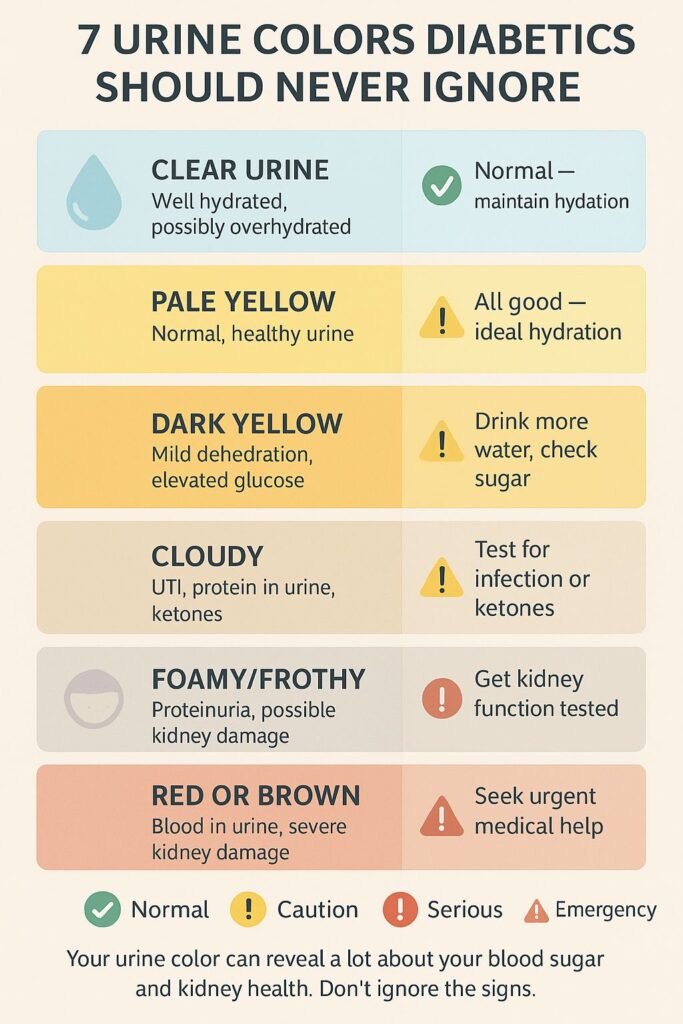
The Biology of Urine Color in Diabetes
Core Components of Urine
Your urine is mostly 95% water, with waste like urea, creatinine, and electrolytes mixed in. If your blood sugar stays high, extra glucose and ketones spill into your urine.
This can change both color and smell. When glucose leaves your body, it drags water with it, causing frequent urination and making you thirsty all the time.
Common Urine Colors and What They Mean in Diabetes
Your urine color can show how diabetes affects your body. Clear urine usually means you’re well-hydrated and your blood sugar’s steady.
Dark yellow urine often points to dehydration from high blood sugar. Brown or dark brown urine might mean kidney stress.
Cloudy urine could be a sign of infection or ketones. Foamy urine might suggest protein loss.
Red urine (or hematuria) isn’t normal and needs urgent care. If your urine smells odd—sweet or like chemicals—it might mean sugar or ketones are present.
Using a urine color chart can help you track these changes.
Why High Blood Sugar Changes Urine Color
If you have high blood sugar, your kidneys dump extra glucose into your urine. That sugar pulls water along, causing polyuria and making you lose fluids.
Dehydration makes your urine darker. Over time, kidney stress can let protein leak into urine, making it cloudy or foamy, as described in diabetic urine color changes.
Diabetic Ketoacidosis (DKA) & Urine Changes
When diabetic ketoacidosis (DKA) kicks in, your urine often sends up red flags. You might spot cloudiness, a sweet or fruity smell, or foam.
Home strips usually pick up ketones. The Mayo Clinic points out that labs show sharp changes, too.
| Check | Typical | With DKA |
|---|---|---|
| Blood sugar | Below 180 | Above 250 |
| Urine ketones | None | High |
| Urine pH | Near neutral | Acidic |
Diabetic Nephropathy – A Silent Urine Symptom
Diabetic nephropathy creeps up as high blood sugar damages your kidney filters. This damage lets protein in urine (proteinuria) and sometimes blood in urine slip through.
These changes in urine often show up before you feel sick. You can learn more about kidney damage and diabetes in this overview of diabetic nephropathy symptoms and causes.
Urine Changes That Signal Trouble
- Foamy urine that sticks around after flushing
- Proteinuria on a urine test
- Dark urine or signs of blood in urine
- Swelling in your face, feet, or ankles
- Constant tiredness or rising blood pressure
Case Examples From People Living With Diabetes
Case A – Raj, age 48, living with type 2 diabetes
You spot foamy urine, sometimes amber. Tests catch early kidney stress.
- Care: ACE meds and tighter glucose goals
- Result: Your kidney readings stay steady
Case B – Alisha, age 24, living with type 1 diabetes
You notice cloudy, sweet-smelling urine during an illness. Doctors find early DKA.
- Care: Hospital insulin drip
- Result: You recover fully
How to Check Your Urine at Home
Items to Get at the Drugstore
Pick up ketone strips, glucose strips, and protein dipsticks. These help with a basic urine test, simple urinalysis, and early microalbumin test screening.
Steps to Follow
Collect a midstream sample. Dip the strip, wait for the color to change, and compare it to the guide on the package.
When You Should Contact Your Doctor
Call your doctor if you see ongoing dark or foamy urine, pain or blood, or a positive ketone test. If you feel constant thirst, fatigue, swelling, or have overactive bladder symptoms, get checked out.
Bring a urine sample and a list of your symptoms if you can.
Preventive Habits for Urine and Kidney Health
What to Do
- Check your blood sugar often and take your diabetes meds.
- Drink water every day.
What to Avoid
- Don’t skip your A1C tests.
- Don’t ignore urine changes or try to self-treat UTIs or pain.
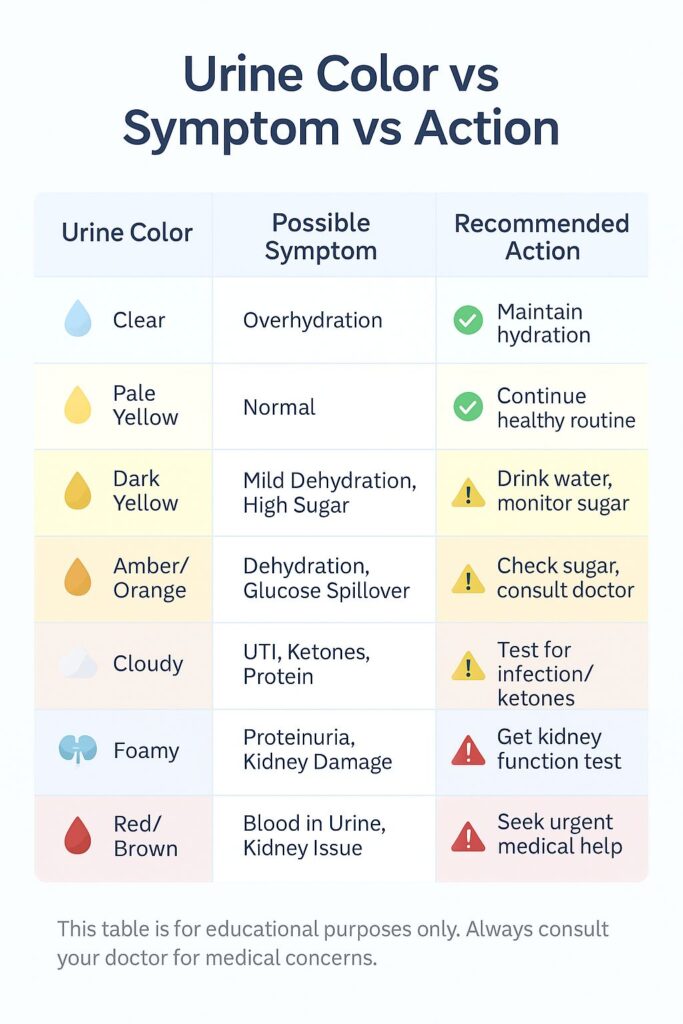
FAQs: Diabetes & Urine Color
1. How urine shade changes with high blood sugar
High sugar usually makes your urine dark yellow or amber. This happens as you lose fluids and pass extra glucose.
Pale urine can happen if you pee a lot.
2. Reasons diabetes may cause cloudy urine
Cloudy urine sometimes means:
- Urinary tract infections
- Protein in urine
- Ketones
3. Causes of foamy urine in diabetes
Foam might mean protein is leaking into your urine. That could signal kidney stress, so it’s worth testing.
4. Steps to take if urine smells sweet
Check your blood sugar and ketones right away. If readings stay high, get urgent care.
5. Ways to lower urine-related risks
- Keep your blood sugar in range
- Drink enough water
- Watch for changes, even rare ones like purple urine
- Get regular kidney checks
Frequently Asked Questions
Which urine color changes may signal a problem when you have diabetes?
You might notice very pale urine if you pee a lot because of high blood sugar. Dark yellow or amber urine can point to dehydration.
Cloudy or red urine might mean infection or blood—definitely something to get checked. Many guides on diabetes urine color changes explain how these shifts tie into blood sugar control and hydration.
Can high blood sugar change how your urine looks?
High blood sugar pulls extra water into your urine, so it often ends up lighter in color. You might notice you’re running to the bathroom more.
Over time, if your blood sugar stays high, other urine changes might show up too. More details are in articles about how high blood sugar affects urine.
Do certain urine colors point to ketones in diabetes?
Ketones themselves don’t really change urine color. You might pick up a strong or sweet smell instead.
If ketones and sugar show up together, that’s something health guides mention when talking about diabetic urine smell and signs.
How does dehydration tied to diabetes affect urine color?
If you’re losing fluids from frequent urination, your urine might shift to a dark yellow or orange shade. That’s just your urine getting more concentrated.
When you stay hydrated, your urine usually looks pale yellow. Most doctors seem to agree that’s a good sign.
When should urine color changes lead you to see a doctor?
Definitely reach out to a doctor if you notice any of these:
- Red or pink urine
- Brown urine
- Cloudy urine with pain or fever
- Strong odor that does not improve
These symptoms sometimes point to infections or kidney problems. People with diabetes run into these issues more than most, according to advice on urinary problems in diabetes.
Can diabetes medicines change your urine color?
Some medicines can make urine darker or brighter. Your body changes the drug, and that process often affects urine color.
If you notice pain, odour, or other weird symptoms along with the color change, reach out to your healthcare provider. It’s worth checking to rule out anything else.